



Unlock the Editor’s Digest for free
Roula Khalaf, Editor of the FT, selects her favourite stories in this weekly newsletter.
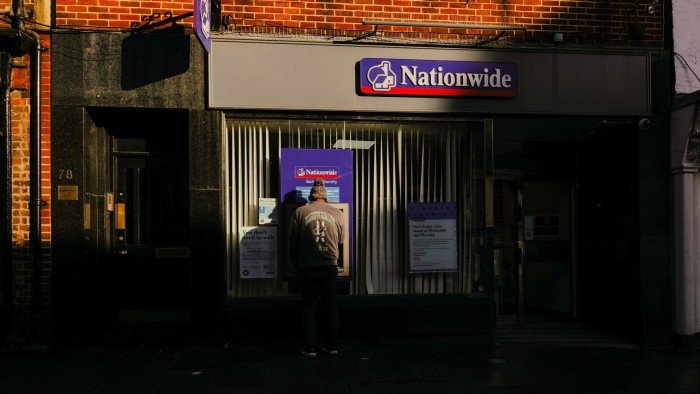
Nationwide has doubled down on its commitment to provide face-to-face banking services on British high streets by pledging to keep all of its 696 branches open until 2030, despite many banks closing theirs.
The new pledge will protect all Nationwide and Virgin Money branches, extending its previous “branch promise” by two years. Bosses hope it will win them greater custom from rival banks, which are cutting costs by closing branches as the shift to online banking intensifies.
Over the past decade, the UK has lost 66 per cent of its bank branches, according to research by consumer group Which?, with more than 6,500 closing for good. In high streets where rivals have announced closures, Nationwide branches feature prominent window displays featuring slogans such as: “Halifax might be leaving — why don’t you leave Halifax?”

“It’s quite deliberate,” said Amanda Beech, Nationwide’s director of retail services, who added the pledge was especially popular with older, more vulnerable customers. “Switching your bank account is still a big deal for people.”
She said that branch staff frequently have conversations with would-be customers, reassuring them about the process, and allaying fears about the automatic transfer of direct debits or pension payments.
Nationwide said its customers had responded favourably with an 11 per cent overall increase in the numbers using branches in the year to September. One in three current accounts and more than one in five savings accounts are opened in branch. However, Gen Z customers are also using in-branch services, with one in 10 student accounts opened in branch during this academic year.
But in the 133 locations where Nationwide or Virgin is now the last remaining bank in town, the impact has been even more dramatic. Current account openings have risen by 29 per cent year-on-year, and there has been a 25 per cent rise in cashpoint usage (compared with 28 per cent and 5 per cent across the network as a whole).
Lloyds, NatWest, Halifax and Bank of Scotland are between them set to close 113 branches before the end of November. In March, Santander announced it would close 95 of its 444 branches in the UK.
Critics argue that the exodus of banks and free-to-use ATMs from UK high streets is accelerating the move towards a cashless society. According to banking trade body UK Finance, 22mn adult Britons only use cash once a month or less, yet 1.5mn say their day-to-day spending relies on it.
Last year, the Financial Conduct Authority, the UK regulator, said banks and building societies must assess local access to cash and provide alternative cash services for business and retail customers where gaps in the network were identified. In response, the banking sector has created “bank hubs” where major banks share a branch, enabling customers to carry out cash transactions.
Last year, banks agreed to set up 350 hubs on UK high streets by 2029, to be operated by the Post Office. These hubs, which already number 179, also offer community banking services, where customers can seek advice on more complex banking issues from their lender.



