


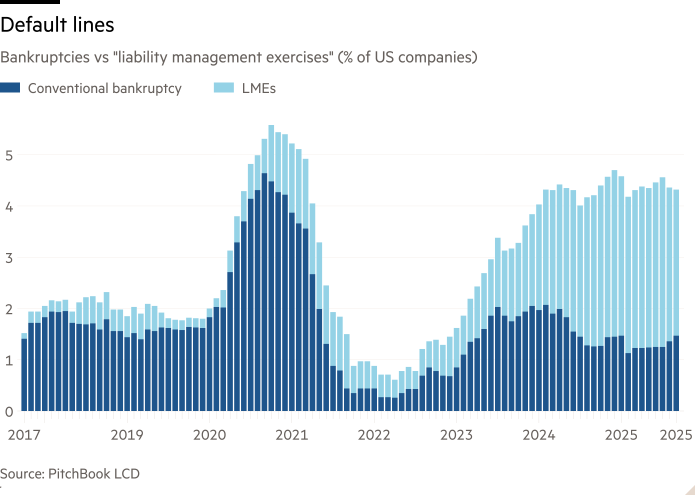

As a bondholder, it was once possible to sleep soundly knowing that if a company came unstuck its lenders would get paid before equity holders. In the brave new world of liability management exercises, or LMEs, that belief looks increasingly quaint.
The idea behind LMEs is to let a company restructure its liabilities outside of the courtroom, and avoid bankruptcy. If the required percentage of creditors agree, the borrower can suspend cash interest payments, move collateral around, and even change the so-called priority waterfall that dictates who gets paid back in what order.
Already common in the US, these reshuffles are now creeping into Europe. Ardagh Group, a Luxembourg-based maker of bottles and cans, is the latest capital contortionist. Under a proposed $10bn restructuring, holders of its riskiest “payment-in-kind” (PIK) debt, with a face value of $1.7bn, would trade their claim for a 7.5 per cent equity stake in an unlisted entity. Meanwhile, equity shareholders — including Irish billionaire and entrepreneur Paul Coulson — emerge with a cash payout of $300mn.
In an actual bankruptcy, it wouldn’t be surprising to see equity holders come out with nothing. But Ardagh isn’t the first to subvert the conventional pecking order. At Dutch lingerie retailer Hunkemöller, distressed-debt investor Redwood Capital lent Hunkemöller €50mn that ranked ahead of all existing bonds, while also swapping its existing €186mn of bonds for new, higher-ranking notes. Ultimately, Redwood seized control of the company.
Things get tricky when groups of lenders are able, thanks to loose documentation, to gang up on other capital providers, in effect compelling them to sign up to unappealing transactions in order to avoid costly bankruptcies. Such creditor-on-creditor violence can mean that relatively lowly second-lien bondholders and equity investors can come out ahead of those above them in the pecking order. A Barclays analysis of LMEs since 2017 found that in only two-fifths of cases did senior instruments do better than more junior claims.

In Ardagh’s case, some bondholders are fighting back. Deutsche Bank and activist hedge fund Carronade Capital have amassed 13 per cent of Ardagh’s junior PIK notes, enough to deprive the company of the 90 per cent approval required for its LME. Similarly, junior and senior creditors to telecoms group Altice France formed an alliance to frustrate attempts at an aggressive rejig led by founder Patrick Drahi.
There is another, broader line of defence: reputation. LMEs may offer a one-time get-out-of-debt-free card, but they come at a cost. Private equity sponsors still need to borrow from investors in the future, and nuking creditor goodwill isn’t the best calling card. The desire to be liked might not much stay the hand of entrepreneurs like Drahi and Coulson, but for buyout firms at least, it should keep the violence somewhat in check.



