



Unlock the Editor’s Digest for free
Roula Khalaf, Editor of the FT, selects her favourite stories in this weekly newsletter.
We are still three weeks or so away from Budget day, and the process to get there has been extremely unpleasant for all involved. Highlights, if you can call them that, include a tearful chancellor, wild and frankly ridiculous claims that the country needs an IMF bailout, and a series of political dead ends. Now, we can add broken manifesto promises to the list.
But bond investors always knew those manifesto promises would have to go, while other promises on not raising borrowing would hold. As a result, while the politics has been something of a bin fire, the market for UK government bonds has been an oasis of calm, confident enough to assume the chancellor will not lean on investors there to plug the gaps in public finances.
You can tell this because the broad direction of travel for gilt prices in the past month or so has been very clearly up, not down. From about 4.8 per cent in early September, benchmark 10-year gilts yields — the flip side to prices — are close to their lowest point of the year, at 4.4 per cent.

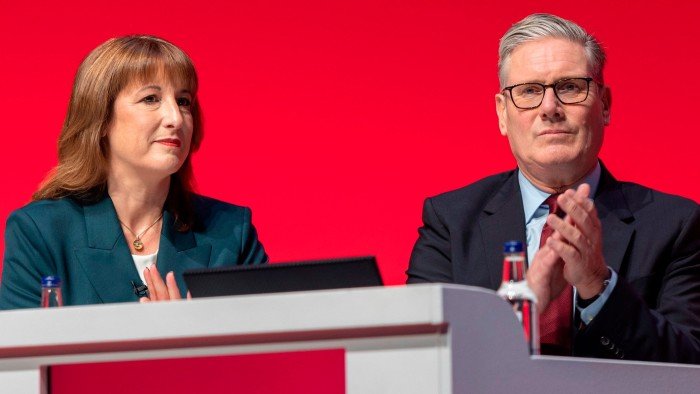
On Tuesday, in the immediate aftermath of comments from chancellor Rachel Reeves pointing clearly in the direction of large tax rises, they are pretty steady again.
This is not the result of dumb luck, although a shift lower in US yields has helped. Reeves and her team have worked hard on understanding the limits of what the bond market would stomach, determined not to repeat the tragicomic mistakes of Liz Truss in her short stint as prime minister.
Truss’s explosive “mini” Budget, delivered by then chancellor Kwasi Kwarteng in the autumn of 2022, famously lit a fuse under the gilts market, sending prices tanking and yields soaring, threatening an arcane corner of the pensions industry and triggering an emergency response from the Bank of England.
Bond investors globally still look back in horror on what is widely known as the “Liz Truss moment” and no sane politician would want to repeat it. The long shadow of that bruising episode acts as a major constraint on what governments everywhere are willing to risk with their public finances — a natural experiment that has put others off for life.
What is clear now is that a “Rachel Reeves moment” is vanishingly unlikely. She has to upset somebody, but that will be the electorate (at least part of it anyway), not the bond market.
The Budget itself is awkwardly timed for November 26, a day before US markets shut for the Thanksgiving holiday. This will force global investors to make snap decisions about its contents and what it means for borrowing and growth in the years to come.
Assuming no upsets, and given the UK government’s apparently genuine willingness to tackle its fiscal deficit, plenty of investors would likely be willing to take on more UK exposure in their debt portfolios once the danger has definitively passed.
It is reasonable to ask at this point whether bond markets should have this power. Why should politicians bounce off this electric fence and not off others? Leftwing commentators will probably argue this is a case of the will of the people bending to fat cats. But that is wide of the mark.
Like it or not, this is just a fact of life. Unless governments want to somehow force investors to buy their bonds, or prevent them selling bonds with some kind of capital controls — the nuclear option — then they have to live with the reality that investors will buy gilts on behalf of their stakeholders, including pension funds, only if it makes economic sense.
Still, the market reaction is not exactly a sparkling round of applause. At the same time as gilts have held steady on Tuesday, sterling has been falling — not dramatically, but falling nonetheless. It is down by about half a per cent on the day to a little over $1.30 against the dollar, its lowest point since April. Again, a pick-up in the dollar is not helping the pound, but this is a sign that investors think the impending tax rises will be bad for the UK’s economic growth outlook — yet another confirmation that Reeves has no good choices here.
Reeves lacks the shields that some other major borrowers enjoy. The US has the luxury of operating the world’s dominant reserve currency, which helps it wriggle out of all kinds of tight spots. France has backup from the EU and the European Central Bank. The UK is on its own and is still hobbled by unhappy memories of the Truss moment. It has sensibly chosen not to poke the bonds beast again.



