


Australia’s annual inflation rate accelerated to 3.8% in October 2025, exceeding market expectations and complicating the Reserve Bank of Australia’s path toward further monetary easing.
The October reading marks an uptick from September’s 3.6% and a significant beat on the 3.5% consensus, with core inflation also climbing.
Key Takeaways
- Headline CPI: Rose 3.8% year-over-year in October, up from 3.6% in September and above the expected 3.7%
- Monthly inflation: Flat at 0.0% in original terms but rose 0.3% on a seasonally adjusted basis
- Core inflation (Trimmed mean): Increased to 3.3% annually from 3.2% in September, exceeding the 3.2% forecast
- Main drivers: Housing costs (+5.9%), particularly electricity prices (+37.1%), alongside food and non-alcoholic beverages (+3.2%) and recreation and culture (+3.2%)
- Goods vs. Services: Goods inflation rose 3.8% annually while services inflation accelerated to 3.9%, up from 3.5% in September
The October inflation surge was predominantly driven by a substantial 37.1% annual increase in electricity costs, reflecting the complex interplay of state and federal energy rebate programs.

The timing of Commonwealth Energy Bill Relief Fund (EBRF) payments also contributed to the elevated annual figure. Excluding the various government rebate changes, electricity prices would have risen a more moderate 5.0%, aligned with July’s annual price reviews.
Link to official ABS Consumer Price Inflation October 2025 Report
In addition, rent growth accelerated to 4.2% annually from 3.8% in September, though this partly reflects reduced impact from Commonwealth Rent Assistance compared to the prior year period. Stripping out CRA adjustments, underlying rent inflation was 4.5% annually, showing marginal deceleration from September’s 4.6%.
Food and non-alcoholic beverage prices rose 3.2% annually, unchanged from September and hovering around the 3.0% level for the past year.
Meat and seafood prices jumped 3.8% year-over-year, with lamb and goat surging 14.6% and beef and veal climbing 10.5% amid strong overseas demand for Australian red meat. Non-alcoholic beverages rose 4.8%, heavily influenced by a 16.4% spike in coffee, tea, and cocoa prices due to constrained global coffee bean supply.
Market Reactions
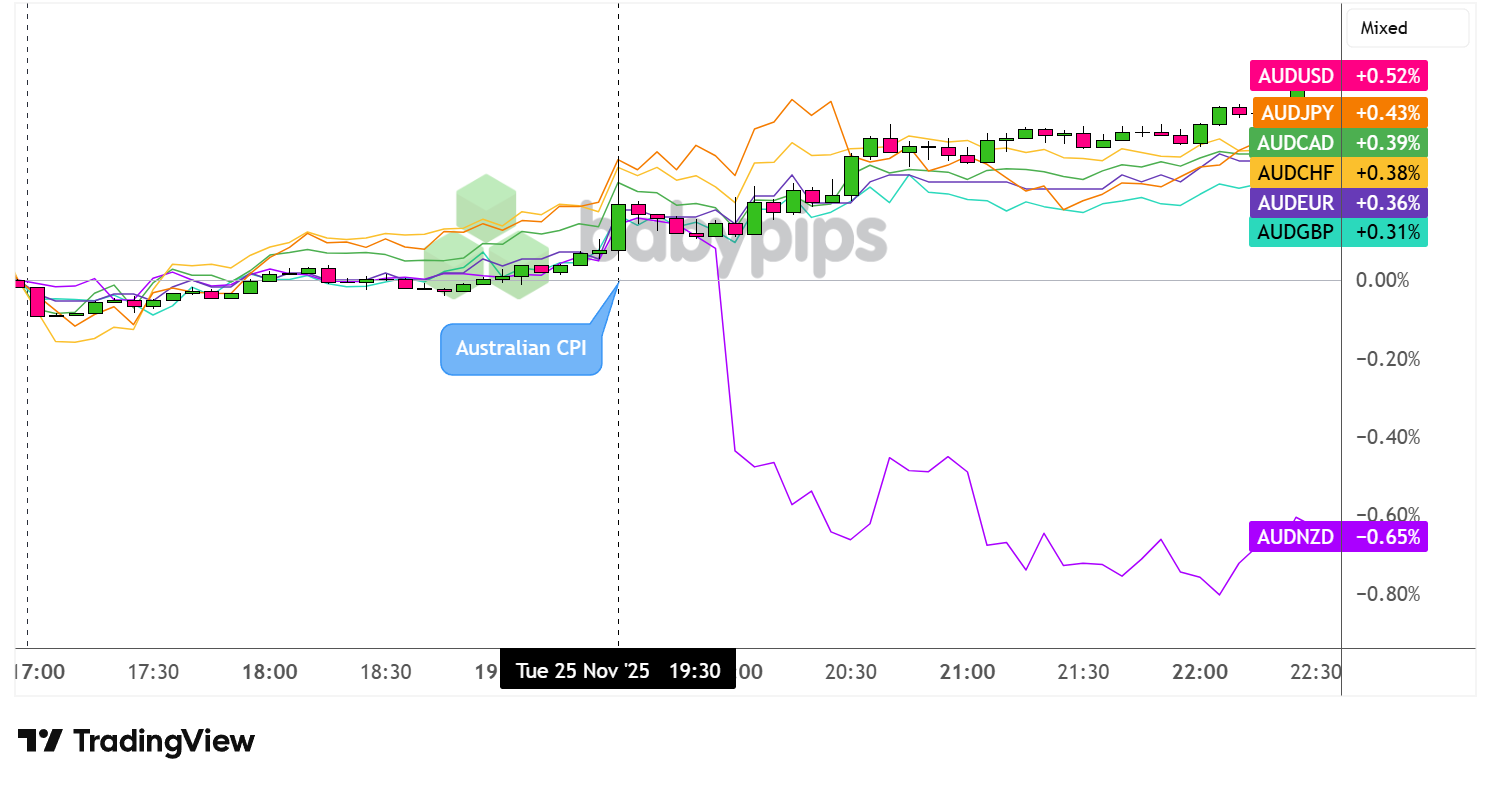
Australian Dollar vs. Major Currencies: 5-min
Overlay of AUD vs. Major Currencies Chart by TradingView
The Australian dollar, which had already been cruising gradually higher since the start of the Asian session, showed additional strength against majority of its peers following the higher-than-expected inflation print.
The currency gained approximately 0.5% against the U.S. dollar in the immediate aftermath of the release, followed by a decent 0.43% climb against the Japanese yen and a 0.39% increase against the Canadian dollar.
Its gains were capped and soon erased against the New Zealand dollar, however, as the currency took cues mainly from the RBNZ interest rate decision in the same session.